


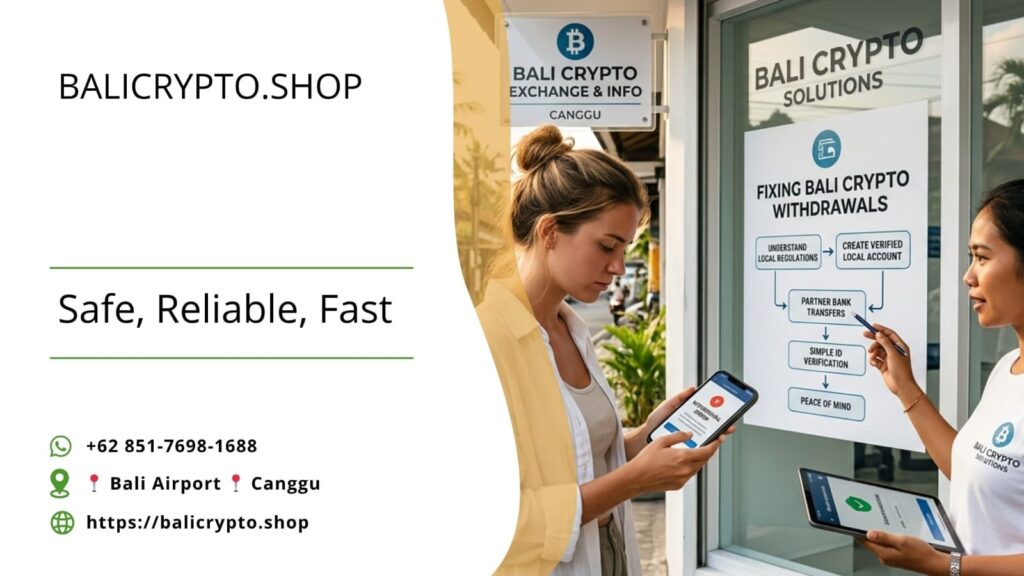
Why Crypto Withdrawal in Bali Can Be Difficult (And Fix) is a topic that resonates with almost every digital nomad and international traveler who arrives on the island with a digital-first mindset. Bali has long been a sanctuary for remote workers, yet the financial infrastructure often presents a stark contrast to its high-tech visitor demographic. While you might be able to manage a global business from a beach club in Canggu, converting your Bitcoin or USDT into physical Indonesian Rupiah (IDR) often involves navigating a maze of local regulations and banking hurdles. This guide explores the fundamental reasons behind these challenges and provides actionable solutions to ensure you never run out of cash while exploring the Island of the Gods.
The Legal and Regulatory Hurdles in Indonesia
The primary reason Why Crypto Withdrawal in Bali Can Be Difficult (And Fix) involves the specific way the Indonesian government regulates digital assets. The Commodity Futures Trading Regulatory Agency, locally known as Bappebti, classifies cryptocurrencies as commodities rather than legal tender. Consequently, it is strictly illegal to use crypto for direct payments in shops, hotels, or restaurants. Every transaction on Indonesian soil must, by law, be settled in Rupiah. This creates an immediate need for a conversion “bridge” that many tourists are unprepared for.
Furthermore, Indonesian law is very protective of its domestic banking sector. Most local crypto exchanges require a “KITAS” (work permit) or a local identity card (KTP) to open a fully functional account. For a tourist on a 30-day or 60-day visa, this makes the traditional “exchange-to-bank” route nearly impossible. Understanding this regulatory wall is the first step in realizing Why Crypto Withdrawal in Bali Can Be Difficult (And Fix), as it forces travelers to look beyond standard banking apps toward more specialized, visitor-friendly services.
Banking Restrictions for International Travelers
Another significant factor in Why Crypto Withdrawal in Bali Can Be Difficult (And Fix) is the disconnect between international crypto platforms and Indonesian banks. Most major global exchanges do not have direct “off-ramp” integration with Indonesian financial institutions for non-residents. Even if you manage to find a P2P buyer on a global platform, receiving those funds into a foreign bank account while in Bali often triggers fraud alerts or results in exorbitant international transfer fees.
Moreover, local ATMs in Bali are notorious for their low withdrawal limits and high “out-of-network” charges. If you are trying to fund a long-term villa stay or buy a high-end surfboard, relying on a foreign debit card linked to a crypto-funded bank account is rarely cost-effective. This logistical friction is exactly Why Crypto Withdrawal in Bali Can Be Difficult (And Fix) for the average nomad. To solve this, savvy travelers have pivoted toward utilizing professional Over-the-Counter (OTC) desks that operate within the commodity trading framework, allowing for cash-in-hand transactions that bypass the banking bottleneck.
Safety Risks with Unregulated P2P Exchanges
When liquidity becomes an issue, many travelers turn to social media groups or Telegram channels. However, this is often Why Crypto Withdrawal in Bali Can Be Difficult (And Fix) becomes a safety concern. Unregulated peer-to-peer trades with strangers carry immense risks, including the potential for “dirty” money entering your account or, in worst-case scenarios, physical theft. Meeting a stranger in a cafe to swap USDT for a stack of Rupiah is a high-risk gamble that can lead to permanent financial loss or legal complications with local authorities.
To mitigate these risks, you must prioritize professionality over the “perceived” convenience of a random Telegram contact. A professional service provider offers a secure, physical location and a transparent exchange rate. By choosing a reputable office, you address the safety aspect of Why Crypto Withdrawal in Bali Can Be Difficult (And Fix), ensuring that your transaction is handled as a professional commodity sale rather than a risky back-alley deal. This peace of mind is invaluable when you are thousands of miles away from home.
The Cultural and Digital Solution: E-Wallets and QRIS
Indonesia is currently undergoing a massive digital payment revolution, which provides a brilliant solution to Why Crypto Withdrawal in Bali Can Be Difficult (And Fix). While you cannot spend crypto directly, you can spend digital Rupiah everywhere using the QRIS (Quick Response Code Indonesian Standard) system. Almost every merchant, from the smallest warung in Ubud to the most expensive boutique in Seminyak, accepts these QR codes. The challenge is simply getting your crypto value into a local e-wallet like GoPay, OVO, or Dana.
Professional conversion services can often facilitate this for you. Instead of carrying large amounts of physical cash—which can be a target for petty theft in crowded tourist areas—you can have your crypto sold as a commodity and the proceeds sent directly to your e-wallet. This modern approach effectively addresses Why Crypto Withdrawal in Bali Can Be Difficult (And Fix) by allowing you to operate like a local. You get the benefits of crypto ownership with the convenience of a domestic payment system that works seamlessly for transportation, food, and shopping.
Logistics: Best Practices for Success in Bali
Successfully managing your finances in Bali requires a bit of logistical planning. One reason Why Crypto Withdrawal in Bali Can Be Difficult (And Fix) involves the physical geography of the island. Most reliable service providers are located in the southern hubs like Canggu, Kuta, and the area around Ngurah Rai International Airport. If you are staying in remote areas like Amed or North Bali, you should handle your liquidity needs before leaving the south, as digital asset services are much harder to find in the rural regions.
Additionally, always use a reputable VPN when accessing your wallet or exchange. Public Wi-Fi in Bali’s trendy cafes is often unencrypted, making it a hunting ground for hackers. By combining digital security with the use of established OTC desks, you create a robust strategy that solves the riddle of Why Crypto Withdrawal in Bali Can Be Difficult (And Fix). Always plan your withdrawals for weekday mornings to avoid the intense afternoon traffic and to ensure you have the full support of the service provider’s staff during business hours.
Why USDT is the Key to Solving the Problem
In the context of Why Crypto Withdrawal in Bali Can Be Difficult (And Fix), the type of asset you hold matters. Bitcoin and Ethereum are often too volatile for daily budgeting. Most expats and travelers have found that USDT (Tether) is the most efficient bridge. Because USDT is pegged to the US Dollar, it removes the “price-drop anxiety” during the time it takes to execute a transaction.
Local services in Bali overwhelmingly prefer USDT because of its high liquidity and predictable value. When you use USDT, the exchange rates are generally much closer to the global market rate compared to other tokens. This efficiency is the final piece of the puzzle in understanding Why Crypto Withdrawal in Bali Can Be Difficult (And Fix). By holding your funds in a stable asset and converting through a professional desk, you eliminate the volatility, the banking blocks, and the high fees in one single, elegant move.
Conclusion
Navigating the financial landscape of Bali doesn’t have to be a stressful part of your journey. While the traditional banking system and local regulations present clear challenges, the growing infrastructure for digital commodities offers a reliable way out. Understanding Why Crypto Withdrawal in Bali Can Be Difficult (And Fix) is simply a matter of knowing which tools to use and which risks to avoid.
By prioritizing licensed services, utilizing e-wallets, and staying informed about local laws, you can enjoy the unparalleled beauty of Bali with total financial confidence. Whether you are catching waves in Canggu or exploring the temples of Bedugul, your digital wealth is only a few steps away from being local currency.
📲 WhatsApp us to +6285176981688
📍 Bali Airport 📍 Canggu
USDT is processed as a commodity sale in Indonesia, not as a direct payment method.
Disclaimer:
We are not a crypto exchange. We operate as an aggregator, connecting customers with 4+ licensed exchange partners to compare available rates.
Any rate shown is for reference only and may vary based on market conditions, liquidity, and the selected exchange.
In accordance with the Stablecoins Ordinance, we do not provide quotes. For current market information, please refer to authoritative sources or consult a financial advisor.