

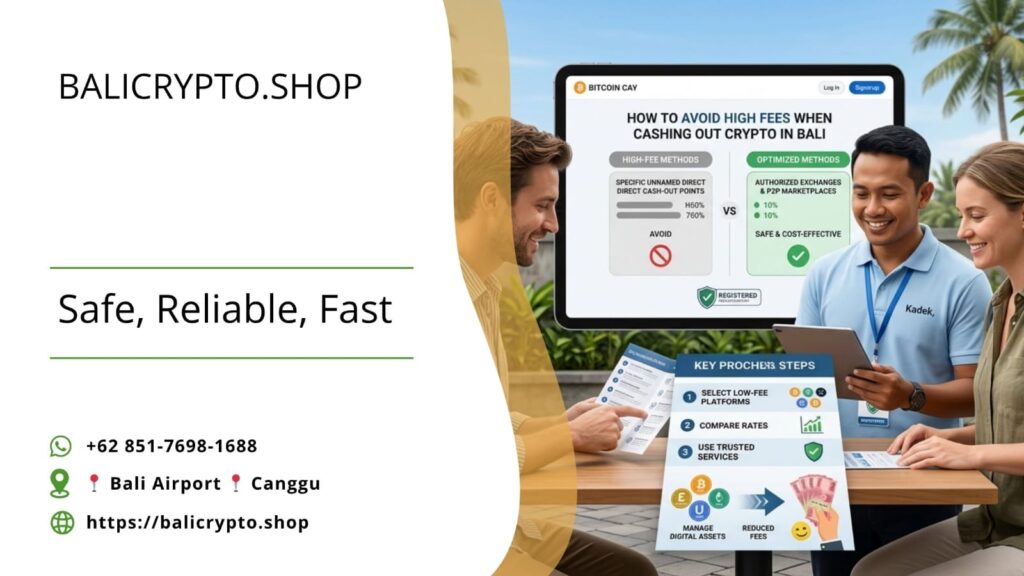
How to Avoid High Fees When Cashing Out Crypto in Bali is a vital skill for digital nomads, expatriates, and savvy travelers who want to maximize their spending power on the Island of the Gods. Bali has evolved into a global sanctuary for the crypto-community, yet the local financial landscape can still be tricky for those used to seamless Western banking. When you arrive in a paradise like Canggu or Ubud, the last thing you want is to lose a significant percentage of your budget to hidden transaction costs, unfavorable spreads, or high-commission physical exchanges. By understanding the local regulatory environment and choosing the right liquidity paths, you can ensure that your Indonesian Rupiah (IDR) goes further, whether you are paying for a long-term villa rental or daily surf lessons.
The Economics of Crypto Exchange in Indonesia
To understand How to Avoid High Fees When Cashing Out Crypto in Bali, you must first grasp how the Indonesian government views digital assets. The local regulator, Bappebti, classifies cryptocurrencies like USDT and Bitcoin as commodities. Because they are not legal tender, you cannot use them to pay for a smoothie bowl or a taxi directly. Consequently, every time you need to spend money, you must facilitate a “sale” of your commodity for Indonesian Rupiah. This bridge between the digital and physical worlds is where most high fees occur.
Many travelers mistakenly rely on international bank transfers or global P2P platforms that charge high intermediary bank fees. These hidden costs can often eat up 3% to 5% of your total value before the money even hits a local account. To truly master How to Avoid High Fees When Cashing Out Crypto in Bali, you should look for direct Over-the-Counter (OTC) services or local liquidity providers that offer transparent, flat-rate structures. These professionals understand the needs of the international community and provide rates that are much closer to the global market mid-point.
Choosing the Right Networks for Low-Cost Transfers
A significant portion of your expenses often comes from the blockchain network fees rather than the exchange service itself. If you are researching How to Avoid High Fees When Cashing Out Crypto in Bali, you likely already know that Ethereum (ERC-20) gas fees can be prohibitively expensive for small or medium withdrawals. To keep your costs low, savvy nomads in Bali prefer using networks like TRON (TRC-20) or Binance Smart Chain (BEP-20) when sending USDT to an exchange desk.
These networks typically cost less than $1 per transaction, compared to the potentially high double-digit fees on Ethereum during peak congestion. When you reach out to a local service provider, always ask which networks they support. By selecting the most efficient blockchain, you have already taken the first major step in How to Avoid High Fees When Cashing Out Crypto in Bali. This technical foresight allows you to move funds frequently without worrying about eroding your principal balance through network congestion.
Avoiding the Pitfalls of Traditional ATMs and Foreign Cards
Many travelers arrive in Bali planning to use “crypto debit cards.” While these are convenient, they are rarely the most cost-effective method. Most local ATMs in Indonesia have a withdrawal limit of 1,250,000 to 2,500,000 IDR per transaction (roughly $80 to $160 USD). If you need a larger sum for a monthly villa payment, you will have to perform multiple withdrawals, each incurring a fee from your bank and potentially the local machine. Furthermore, the exchange rate applied by the card issuer is often 2% to 4% worse than the actual market rate.
If your goal is How to Avoid High Fees When Cashing Out Crypto in Bali, you should bypass the ATM altogether for large sums. Instead, utilizing an OTC desk allows you to perform one single transaction for the full amount you need. This consolidated approach eliminates repetitive withdrawal fees and provides you with a much more favorable exchange rate. Additionally, it is much safer than standing at a street-side ATM in a busy tourist area with a large stack of cash.
Leveraging E-Wallets and QRIS for Daily Savings
Indonesia’s digital payment revolution is a hidden gem for those looking for How to Avoid High Fees When Cashing Out Crypto in Bali. The QRIS (Quick Response Code Indonesian Standard) system is now accepted by almost every vendor on the island. By converting your crypto into a local e-wallet like GoPay or OVO through a reputable exchange service, you can pay for almost everything—from Gojek rides to dinner—without ever touching a physical banknote.
This digital-to-digital transition is often the centerpiece of the How to Avoid High Fees When Cashing Out Crypto in Bali strategy. It allows you to maintain your funds in a stablecoin until the exact moment you need to spend them, protecting you from the minor daily fluctuations of the Rupiah. Furthermore, paying via QRIS often comes with zero transaction fees for the consumer, making it the most efficient way to manage your “daily bread” while living as an expat in the South Kuta or Canggu districts.
Safety, Privacy, and the Importance of Physical Locations
While searching for How to Avoid High Fees When Cashing Out Crypto in Bali, you may encounter unregulated individuals in Telegram groups offering “zero-fee” trades. These offers are frequently too good to be true and carry significant risks of fraud or security breaches. Privacy and safety are worth the small, transparent fee charged by a professional office. A reputable service provider offers a secure physical environment, which is essential when handling the conversion of high-value digital assets.
Professional desks also ensure that your transaction is handled according to local commodity trading laws. This legal compliance is a crucial part of How to Avoid High Fees When Cashing Out Crypto in Bali, as it prevents your bank accounts from being flagged for suspicious activity. By using an established service near the Bali Airport or in the heart of Canggu, you get the benefit of professional support, a safe meeting place, and the assurance that your Rupiah is legitimate and ready to use.
Strategic Timing and Local Tips for Expats
The time of day you choose to exchange your assets can also impact your total costs. Global crypto markets are most liquid during the overlap of major trading sessions. To optimize How to Avoid High Fees When Cashing Out Crypto in Bali, try to plan your larger exchanges during standard business hours when local liquidity is at its peak. This usually results in tighter spreads and faster confirmation times.
Additionally, consider the geography of Bali. Traffic in areas like Seminyak and Kuta can be grueling. If you are heading to a physical office to finalize your How to Avoid High Fees When Cashing Out Crypto in Bali strategy, use a motorbike taxi (Gojek) to save time. Most professional desks are located in accessible areas, but arriving early in the day ensures you beat the heat and the crowds, making your financial errands as pleasant as a morning at the beach.
Conclusion
Navigating the crypto-to-cash pipeline in Indonesia doesn’t have to be expensive or stressful. By avoiding the high costs of international banking, choosing low-fee blockchain networks, and utilizing local digital payment systems, you can easily master How to Avoid High Fees When Cashing Out Crypto in Bali. This proactive approach allows you to focus on what really matters: enjoying the incredible culture, landscapes, and community that Bali has to offer.
Always remember to prioritize security and legality by using professional services rather than unregulated P2P contacts. With a little planning and the right partners, your digital assets will serve as a powerful tool for a high-quality, cost-effective lifestyle in this tropical paradise.
📲 WhatsApp us to +6285176981688
📍 Bali Airport 📍 Canggu
USDT is processed as a commodity sale in Indonesia, not as a direct payment method.
Disclaimer:
We are not a crypto exchange. We operate as an aggregator, connecting customers with 4+ licensed exchange partners to compare available rates.
Any rate shown is for reference only and may vary based on market conditions, liquidity, and the selected exchange.
In accordance with the Stablecoins Ordinance, we do not provide quotes. For current market information, please refer to authoritative sources or consult a financial advisor.