

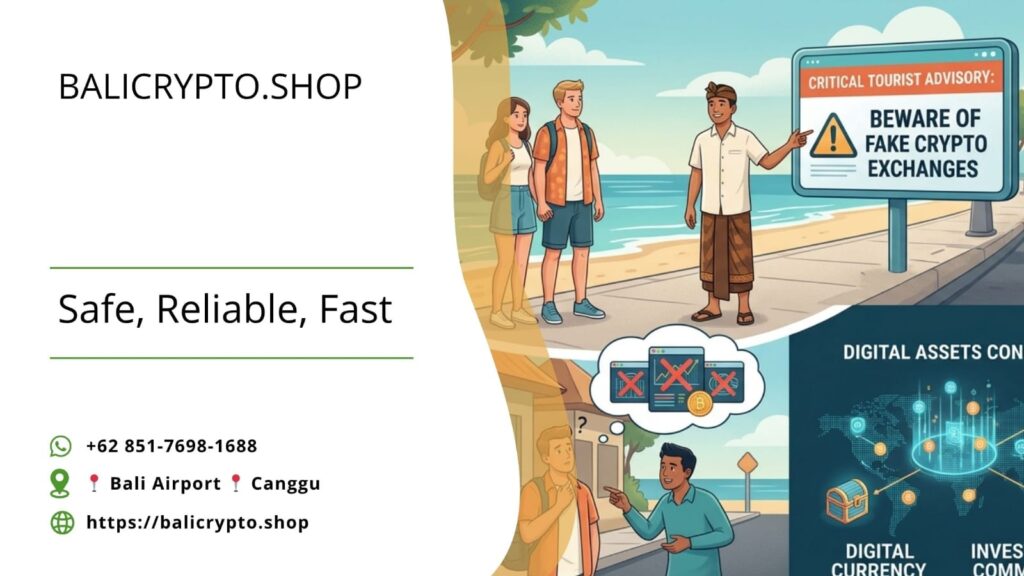
Fake Crypto Exchange Scams in Bali (Tourist Warning) is a critical subject that every digital nomad and international traveler should study before attempting to liquidate digital assets on the island. Bali has transformed into a global sanctuary for the cryptocurrency community, with hundreds of professionals managing their wealth from tropical villas in Canggu or Uluwatu. However, this influx of digital capital has also attracted sophisticated criminal networks that specialize in defrauding foreigners. While the local Balinese culture is deeply rooted in honesty and hospitality, the unregulated “digital underground” can be a dangerous place for the uninformed. This comprehensive guide aims to shed light on the common tactics used by scammers, the legal realities of crypto in Indonesia, and the best practices for ensuring your funds stay safe while you enjoy your stay in paradise.
Identifying the Red Flags of Fraudulent Services
The first step in protecting yourself from Fake Crypto Exchange Scams in Bali (Tourist Warning) is learning to recognize the signs of a fraudulent setup. Scammers often create high-quality websites or social media profiles that mimic legitimate local businesses. They might even rent temporary office spaces to appear credible. However, a major red flag is any service that offers an exchange rate significantly higher than the global market average. In the world of finance, if an offer seems too good to be true, it almost certainly is.
Another hallmark of Fake Crypto Exchange Scams in Bali (Tourist Warning) is a lack of physical transparency. Legitimate providers in Indonesia operate as professional commodity traders with permanent addresses, clear contact details, and a history of positive reviews within the expat community. If a provider insists on meeting in a public park, a random cafe, or a private villa instead of a dedicated office, you should immediately cease communication. Professionalism and a static physical presence are your best defenses against those who wish to disappear with your digital wallet’s contents.
The Danger of Peer-to-Peer (P2P) Group Scams
Social media platforms like Telegram, WhatsApp, and Facebook are hotspots for Fake Crypto Exchange Scams in Bali (Tourist Warning). Many travelers join “Bali Crypto” groups looking for advice, only to be approached by “helpful” individuals offering private P2P trades. These scammers often use psychological tactics to build trust, sharing fake testimonials or claiming to be long-term residents of the island. Once they convince you to send your USDT or Bitcoin, they will block you and vanish from the group entirely.
To avoid these Fake Crypto Exchange Scams in Bali (Tourist Warning), never engage in high-value transactions with individuals you met solely online. These unregulated trades offer no recourse if something goes wrong. In contrast, a professional Over-the-Counter (OTC) desk provides a structured environment where the transaction is documented and the physical cash is verified in your presence. Choosing a professional path ensures that you are not just another statistic in a growing list of tourists who lost their holiday budget to a clever online predator.
Understanding Indonesian Crypto Regulations
A vital part of the Fake Crypto Exchange Scams in Bali (Tourist Warning) involves the legal status of digital assets. In Indonesia, the Commodity Futures Trading Regulatory Agency (Bappebti) classifies crypto as a commodity, not legal tender. This means you cannot legally use crypto to pay for your scooter rental, villa, or surf lessons. Every digital asset must be converted into Indonesian Rupiah (IDR) through a registered intermediary. Scammers often take advantage of a tourist’s confusion regarding these local laws to steer them toward illegal and unsafe exchange methods.
By understanding that you are technically selling a commodity, you can better navigate the landscape. A service that ignores these regulations or suggests “under-the-table” payments is likely part of the Fake Crypto Exchange Scams in Bali (Tourist Warning) network. Professional desks handle these transactions as legitimate sales, ensuring that your activities remain within the bounds of Indonesian law. This legal clarity not only protects your money but also ensures that you do not face complications with immigration or local law enforcement during your visit.
Digital Security: Protecting Your Wallet from Phishing
Digital hygiene is your primary line of defense against Fake Crypto Exchange Scams in Bali (Tourist Warning). Many scammers use phishing links or “cloned” exchange apps to gain access to your private keys or recovery phrases. They may send you a QR code that looks like a payment address but is actually a smart contract designed to drain your entire wallet once you sign the transaction. This is a common tactic used by those operating Fake Crypto Exchange Scams in Bali (Tourist Warning), targeting users who are distracted by the beauty of their surroundings.
Always use a hardware wallet for your main holdings and only move the amount you intend to cash out to a “hot wallet” on your phone. Furthermore, never use public Wi-Fi in Bali’s cafes to perform a transaction. Hackers frequently set up “evil twin” hotspots to intercept your data. To truly avoid Fake Crypto Exchange Scams in Bali (Tourist Warning), use your own mobile data via a local SIM card and always double-check the recipient’s wallet address. Taking these small technical steps can prevent a catastrophic loss of your digital wealth.
Physical Safety and the Logistics of Currency
Finally, the physical handling of cash is an area where Fake Crypto Exchange Scams in Bali (Tourist Warning) can manifest. Indonesia’s currency, the Rupiah, comes in large denominations, with 100,000 IDR being the highest. This means that a relatively small crypto sale can result in a massive stack of banknotes. Scammers may try to short-change you during the counting process or provide you with counterfeit notes in a “fast-paced” environment to confuse you.
To ensure a safe experience, always use a professional exchange service that provides a high-speed money-counting machine and a private room. This is a key part of the strategy to avoid Fake Crypto Exchange Scams in Bali (Tourist Warning). When you leave the office, be discreet and store your cash in a secure bag. Use a car or a motorbike taxi app to go directly back to your villa or hotel. By staying organized and alert, you turn a potentially high-risk situation into a simple, professional errand.
Conclusion
In conclusion, while the threat of Fake Crypto Exchange Scams in Bali (Tourist Warning) is real, it should not deter you from using your digital assets on the island. By prioritizing licensed OTC desks over unregulated P2P meetings and maintaining strict digital security, you can safely navigate the local economy. Bali is a place of incredible energy and opportunity; protecting your finances allows you to focus on the experiences that make this island so special.
Stay informed, stay skeptical of “miracle” rates, and always choose a professional partner for your currency needs. Whether you are catching the sunrise at Mount Batur or enjoying a sunset in Canggu, your financial peace of mind is the foundation of a perfect holiday.
📲 WhatsApp us to +6285176981688
📍 Bali Airport 📍 Canggu
USDT is processed as a commodity sale in Indonesia, not as a direct payment method.
Disclaimer:
We are not a crypto exchange. We operate as an aggregator, connecting customers with 4+ licensed exchange partners to compare available rates.
Any rate shown is for reference only and may vary based on market conditions, liquidity, and the selected exchange.
In accordance with the Stablecoins Ordinance, we do not provide quotes. For current market information, please refer to authoritative sources or consult a financial advisor.