

Bali, the “Island of the Gods,” is a place where modern luxury meets ancient tradition. While many high-end beach clubs in Seminyak and cafes in Canggu now accept contactless payments, Bali remains a predominantly cash-heavy society. Whether you are paying for a scooter rental, tipping a trekking guide in Ubud, or buying handmade jewelry at a local market, you will need Indonesian Rupiah (IDR).
Knowing how to use ATM around Bali as tourist is one of the most practical skills you can master before landing. However, it’s not as simple as just inserting your card. From card-skimming risks to the “hidden” fees of currency conversion, here is everything you need to know to manage your money like a pro in 2026.
1. Understanding Local Currency & Exchange
The local currency is the Indonesian Rupiah (IDR). In 2026, exchange rates are stable but large—don’t be surprised to see millions in your hand. $100 USD can easily equate to over 1.5 million IDR.
Safe Money Exchange Tips
If you bring physical cash (USD, AUD, EUR), only use authorized money changers displaying the Bank Indonesia “PVA Berizin” logo. Established names like Central Kuta or BMC are your safest bet.
Avoiding High Fees & Scams
- Skip the Airport: Exchange only a small amount at the airport for immediate needs; rates in town are significantly better.
- Recount Your Cash: Always be the last person to count the money before leaving the counter. Roadside booths often use “hand tricks” to make bills disappear.
2. Best Ways to Withdraw Money
The most efficient way to access funds is via local ATMs. However, you must know how to use ATM around Bali as tourist correctly to avoid losing money to fees.
ATM Usage Tips
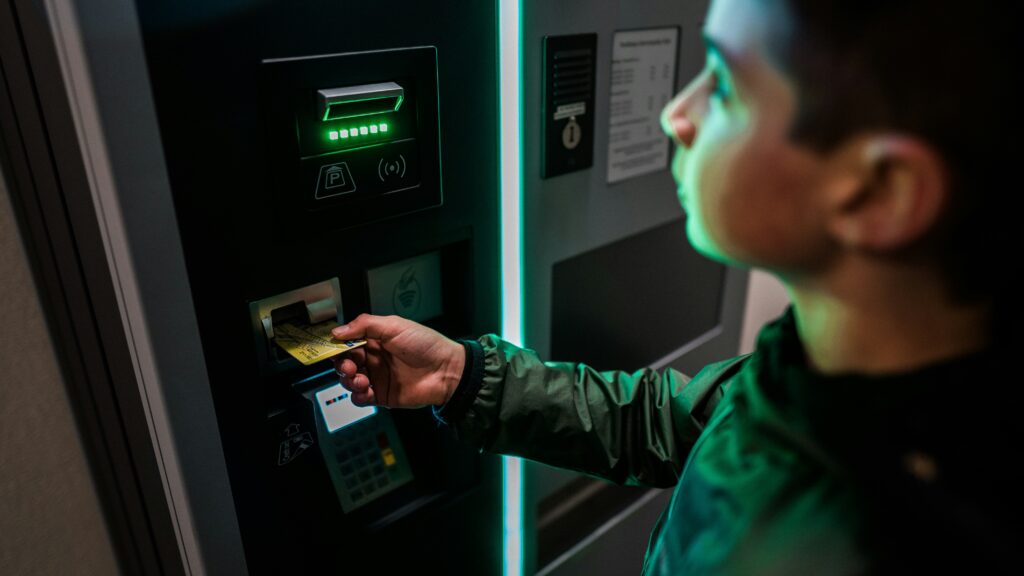
- The “Card-Last” Rule: This is the most common mistake. Most Bali ATMs dispense cash first, then return your card. Many tourists grab their cash and walk away, leaving their card in the machine. Always wait for the final “Do you want another transaction?” screen to clear.
- Note Denominations: Look for a sticker on the machine that says “50,000” or “100,000.” Machines with 100k notes usually allow larger withdrawals (up to 3 million IDR), which saves you on per-transaction fees.
International Cards
Use travel-focused cards like Wise, Revolut, or YouTrip. They offer mid-market exchange rates and often waive international withdrawal fees, saving you up to 5% compared to traditional big-box banks.
Hidden Fees: The DCC Trap
When the ATM asks, “Would you like to be charged in your home currency?” Always choose NO/Decline. This is called Dynamic Currency Conversion (DCC). If you accept, the local bank sets the exchange rate (usually a poor one). If you decline, your home bank handles the conversion at a much better rate.
3. Digital Payments & Crypto Options
Bali has embraced digital transformation in 2026. You can now use more than just physical cash.
E-Wallet Usage & QRIS
QRIS (the red and white QR code) is everywhere. Most local e-wallets like GoPay or OVO allow you to pay by scanning a code. Even cross-border QRIS now works for travelers from certain countries (Singapore, Malaysia, Thailand), letting you pay directly from your home banking app.
Crypto: The Modern Cash-Out
While you cannot pay for a Bintang beer directly with Bitcoin (it’s not a legal payment method for goods in Indonesia), many digital nomads use crypto as their “back-up” bank. You can sell your digital assets for IDR cash through trusted services, which is a lifesaver if your primary bank card is blocked.
4. Saving Money While Traveling
- Withdraw Large Amounts: Since most home banks charge a flat fee per overseas withdrawal, it’s better to withdraw 2.5 million IDR once than 500,000 IDR five times.
- Use Credit for Deposits: When renting a villa or a car, use a credit card for the security deposit. A debit card deposit actually removes funds from your account, and refunds can take up to 15 days.
- Avoid Tourist Traps: Prices in tourist hubs like Kuta Square are often 20-30% higher. Walk a few blocks inland to find local “Warungs” and ATMs with shorter lines.
5. Common Mistakes to Avoi
- ATM Skimming: Never use a standalone ATM in a dark alley or a quiet street. These are primary targets for skimmers. Only use ATMs inside bank branches (Mandiri, BCA, BNI, BRI) or well-lit shopping malls with 24/7 security and CCTV.
- Unsafe Transactions: Don’t exchange money in souvenir shops or tiny stalls. If the rate looks “too good to be true,” it definitely is.
- Ignoring OTPs: Ensure your banking app is set up to work without needing an SMS OTP, or keep your home SIM card active. If you switch to a local Telkomsel eSIM, you might get locked out of your banking app.
6. Why Choose a Trusted Exchange Service?
Traditional banking isn’t always reliable. Cards get swallowed, banks flag “suspicious activity” the moment you land, and limits can be frustratingly low. A trusted local exchange service provides a fast, reliable bridge between your digital assets and the cash you need to enjoy your holiday.
By using a verified service, you get:
- Security: No risk of ATM skimming.
- Reliability: Access to funds even if your physical card fails.
- Transparency: Clear rates without the hidden “conversion” markups.
Conclusion
Knowing how to use ATM around Bali as tourist is the key to a stress-free vacation. By sticking to bank-owned machines, declining DCC conversion, and using digital wallets where possible, you can keep your fees low and your security high. Bali is a place for memories, not for financial headaches.
Need help with buying, selling, or withdrawing crypto?
Contact us now on WhatsApp: +6285176981688
Our transaction system is simple:
- Contact us via WhatsApp to check the latest rates.
- Make payment to our secure crypto wallet QR.
- Confirm your payment with a screenshot or hash.
- Receive your funds instantly via local bank transfer or cash pickup.
Fast, secure, and tourist-friendly—get your IDR the smart way!
* Cryptocurrency is a digital asset, not a legal payment method in Indonesia. All transactions involve the sale of assets for IDR cash.
- Users are responsible for their own transactions and must comply with local Indonesian regulations.
Disclaimer:
We are not a crypto exchange. We operate as an aggregator, connecting customers with 4+ licensed exchange partners to compare available rates.
Any rate shown is for reference only and may vary based on market conditions, liquidity, and the selected exchange.
In accordance with the Stablecoins Ordinance, we do not provide quotes. For current market information, please refer to authoritative sources or consult a financial advisor.