

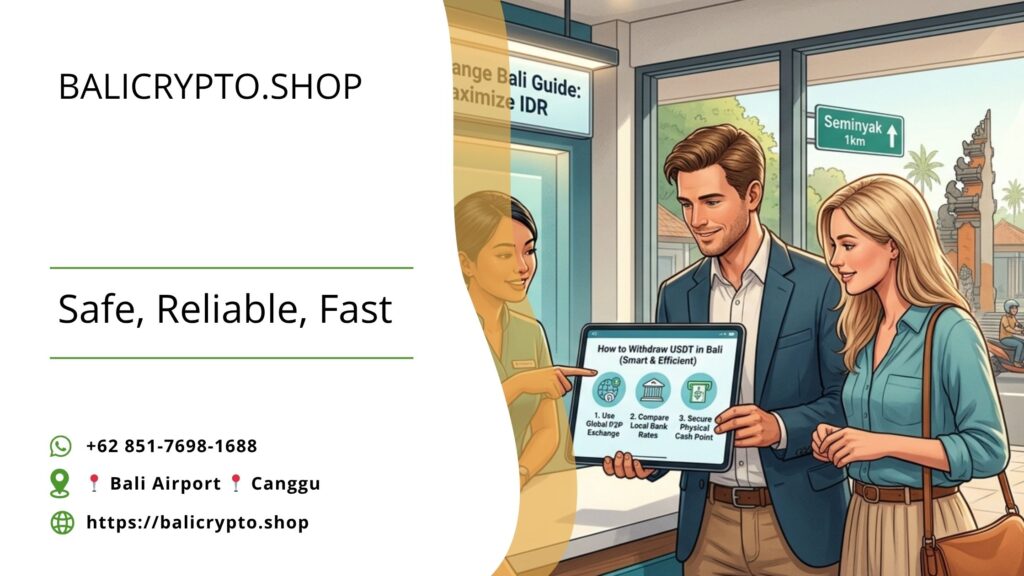
How to Withdraw USDT in Bali Without Losing Money on Fees is a major concern for the growing community of digital nomads and international travelers who choose the Island of the Gods as their remote base. Bali has become a global epicenter for the crypto-savvy, yet the transition from a digital wallet to physical Indonesian Rupiah (IDR) can be riddled with hidden costs, unfavorable exchange rates, and high transaction fees. To protect your travel budget, you must understand the local financial ecosystem, including how Indonesian regulations treat stablecoins and which platforms offer the most competitive spreads. This guide provides a strategic roadmap to help you navigate these waters, ensuring that your hard-earned assets stay in your pocket rather than going toward excessive processing costs.
The Legal Status of USDT and Crypto in Indonesia
Before you begin searching for a withdrawal method, it is essential to understand the legal landscape in Indonesia. The government, through the Commodity Futures Trading Regulatory Agency (Bappebti), classifies USDT and other cryptocurrencies as commodities rather than legal tender. This means that while it is entirely legal to own and trade digital assets, you cannot use them as a direct payment method at a cafe, for a surfing lesson, or for a villa rental. Consequently, all transactions for goods and services must be settled in Indonesian Rupiah.
If you are looking for how to withdraw USDT in Bali without losing money on fees, you are essentially looking for the most efficient way to sell your commodity for local currency. Because Indonesian law mandates the use of the Rupiah for domestic commerce, every crypto user needs a reliable bridge to the local financial system. By using authorized channels and avoiding unregulated “black market” trades, you protect yourself legally while ensuring that you have the liquidity needed for daily life in Bali.
Strategic Methods: How to Withdraw USDT in Bali Without Losing Money on Fees
The most common mistake travelers make is using international bank transfers or centralized exchanges that involve multiple intermediary banks, each taking a percentage cut. To master how to withdraw USDT in Bali without losing money on fees, you should look toward local exchange solutions and professional Over-the-Counter (OTC) desks. These services are often far more cost-effective than using a foreign debit card at a local ATM, which might hit you with poor exchange rates and high out-of-network fees that add up over time.
Another popular method among the nomad community is utilizing registered Indonesian exchanges that support e-wallet withdrawals. By selling your USDT for IDR on a local platform and sending the balance to an app like GoPay or OVO, you can often bypass the heavy fees associated with traditional banking. This approach is a cornerstone of the how to withdraw USDT in Bali without losing money on fees strategy, as it leverages the island’s advanced digital payment infrastructure to keep costs at an absolute minimum.
Utilizing E-Wallets and the QRIS System for Daily Savings
Once you have successfully converted your USDT, the next step is spending it efficiently to avoid further losses. In Bali, the QRIS (Quick Response Code Indonesian Standard) system is ubiquitous. From high-end boutiques in Seminyak to small local warungs in Ubud, almost every merchant accepts QRIS. By keeping your converted funds in a digital e-wallet rather than withdrawing large amounts of physical cash, you avoid the security risks and the “change” issues often found with high-denomination banknotes.
When you master how to withdraw USDT in Bali without losing money on fees, you gain the ability to top up these e-wallets frequently. This “just-in-time” liquidity strategy means you aren’t holding large amounts of Rupiah that you might need to convert back later—a process that would involve paying fees a second time. Staying digital within the local ecosystem is a smart way to maintain your purchasing power while enjoying the convenience of modern Indonesian fintech.
Safety and Security for International Crypto Travelers
Security is paramount when handling digital assets in a foreign country. While Bali is generally safe, the crypto space can attract bad actors. If you are researching how to withdraw USDT in Bali without losing money on fees, you should always prioritize platforms that offer robust security features like Two-Factor Authentication (2FA) and cold storage. Never share your private keys or recovery phrases with anyone, regardless of how official they may seem or how helpful they claim to be.
Furthermore, avoid meeting strangers from social media groups for “cash-for-crypto” trades. These unregulated peer-to-peer meetings are high-risk and often lead to scams or physical safety concerns. Instead, stick to professional service providers located in reputable areas like Canggu or the airport vicinity. Following a professional how to withdraw USDT in Bali without losing money on fees protocol ensures that your transaction is not only cheap but also secure and documented, giving you peace of mind throughout your stay.
Logistics: Navigating Bali’s Traffic to Reach Exchange Desks
Bali’s traffic can be a major hurdle when trying to visit physical exchange offices or OTC desks. If you need to visit a service provider in person to understand how to withdraw USDT in Bali without losing money on fees, consider using a motorbike taxi (Gojek or Grab) rather than a car. Motorbikes can weave through the heavy congestion in areas like Kuta and Canggu, saving you valuable time.
Additionally, most professional desks are most active during standard business hours, so plan your errands for the morning to avoid the peak heat and the intense afternoon traffic. Understanding how to withdraw USDT in Bali without losing money on fees also involves timing your transactions. The exchange rate between the USD (which USDT tracks) and the IDR can fluctuate. By keeping an eye on the market and using services with real-time transparent pricing, you can choose the best moment to convert your assets, ensuring you get the most Rupiah for your digital dollar.
Why USDT is the Preferred Asset for Bali Expats
Among the various cryptocurrencies available, USDT remains the gold standard for travelers in Bali. Its stability against the US Dollar makes it easy to calculate your budget and predict your monthly expenses. When you learn how to withdraw USDT in Bali without losing money on fees, you realize that the liquidity for USDT is significantly higher than for other tokens, resulting in tighter spreads and lower costs.
Most local liquidity providers prefer USDT because it is fast and reliable. Whether you are paying for a long-term co-working space membership or a month-long scooter rental, having a stable supply of USDT ensures you are always ready for the next adventure. Mastering how to withdraw USDT in Bali without losing money on fees is a foundational skill for any modern traveler, allowing you to bridge the gap between the global digital economy and the local Balinese market seamlessly.
Conclusion
Navigating the financial landscape of Bali as a crypto user is an empowering experience when you have the right information. By understanding the commodity status of your assets and utilizing the island’s advanced digital wallets, you can avoid the traditional banking traps that drain your funds. Learning how to withdraw USDT in Bali without losing money on fees is about more than just saving a few dollars; it is about maintaining your financial independence while exploring one of the most beautiful places on Earth.
Stay safe, use reputable services, and always keep an eye on the most efficient conversion pathways. With these strategies in hand, you can spend less time worrying about your bank balance and more time enjoying the sunset at Uluwatu or the rice fields of Jatiluwih.
📲 WhatsApp us to +6285176981688
📍 Bali Airport 📍 Canggu
USDT is processed as a commodity sale in Indonesia, not as a direct payment method.
Disclaimer:
We are not a crypto exchange. We operate as an aggregator, connecting customers with 4+ licensed exchange partners to compare available rates.
Any rate shown is for reference only and may vary based on market conditions, liquidity, and the selected exchange.
In accordance with the Stablecoins Ordinance, we do not provide quotes. For current market information, please refer to authoritative sources or consult a financial advisor.